


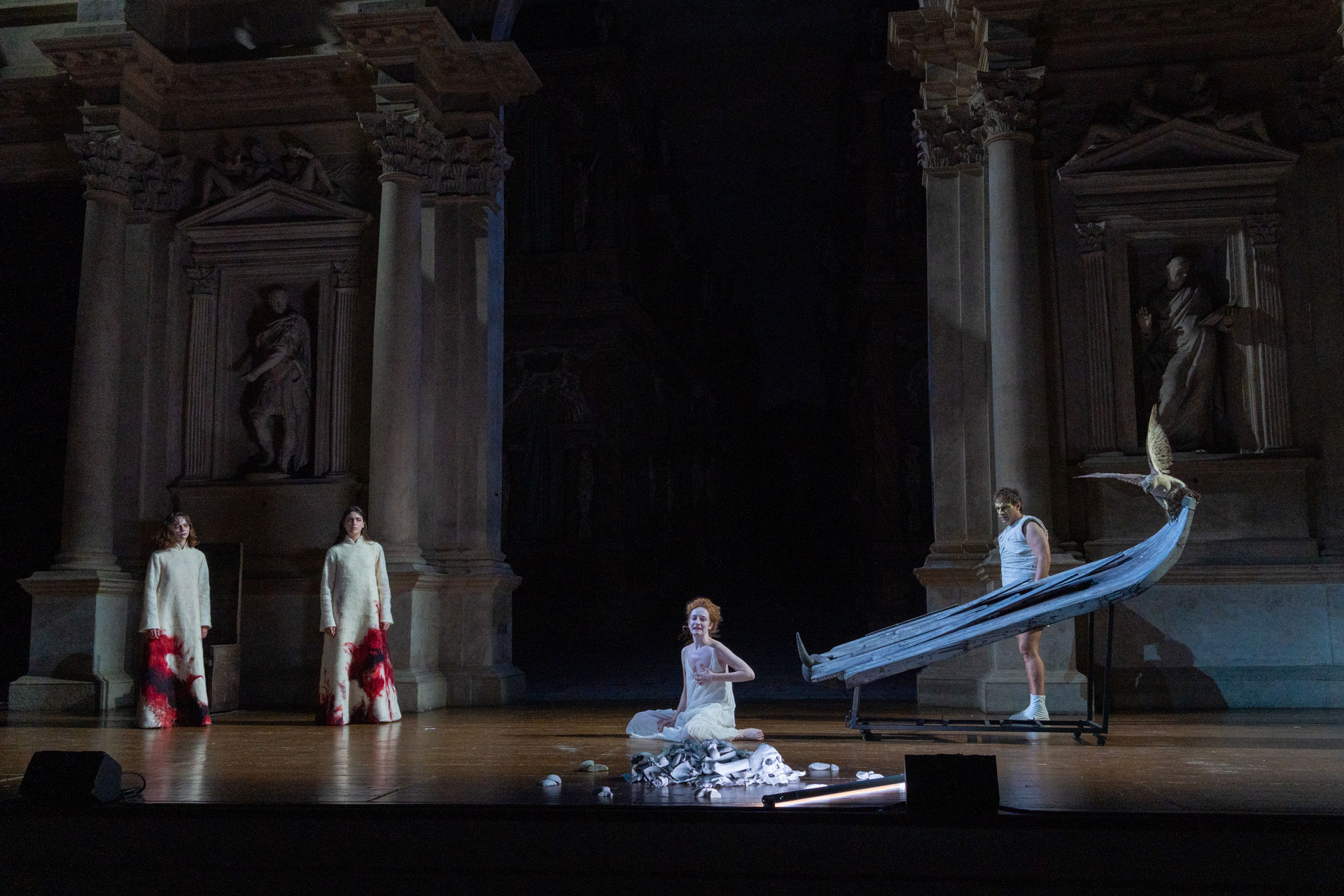


Paolo Nori, an Italian writer and translator specializing in Russian literature, is coming to the LAC to discuss *The Master and Margarita*, Mikhail Bulgakov’s masterpiece—perhaps the most contemporary of the 20th-century Russian classics: a novel about good and evil, justice, and the relationship between art and literature, which reveals more about us than we might care to know.
Paolo Nori Discusses *The Master and Margarita*
Sympathy for the Devil

© Claudio Sforza
1h30’
Paolo Nori Discusses *The Master and Margarita*
Sympathy for the Devil
© Claudio Sforza
1h30’
“When, in 1967, Einaudi published a novel by a Russian writer who had died in 1940 and was unknown to us,” says Paolo Nori, “ Mikhail Bulgakov’s *The Master and Margarita*
, Eugenio Montale wrote that we were witnessing ‘a miracle that everyone must greet with emotion.’ The following year, in 1968, the Rolling Stones recorded a song, ‘Sympathy for the Devil
,’ which Mick Jagger wrote after reading *The Master and Margarita
*. This very likeable devil, named Woland in the novel, when he meets Levi Matteo—the emissary of good—in the center of Moscow, who makes no secret of his contempt for him, says to him: ‘You speak as if you knew nothing of shadows or even of evil. But try, if you can, to ponder this question: what would your ‘good’ ever do if evil did not exist, and what would the earth look like if shadows disappeared? People and things cast shadows. Look at the shadow of my sword. And the shadows of the trees and living beings. Do you want to strip the entire globe bare, removing all the trees and all living beings, for the sake of your fantasy of enjoying the naked light? You are a fool.”
*The Master and Margarit
a
*
is the great novel by a great Russian writer born in Ukraine who, in March 1930, wrote to the Supreme Soviet of the USSR: ‘While reviewing my newspaper clippings, I found that, over the ten years of my literary career, I had received 301 reviews from the Soviet press, of which 3 were favorable and 298 were hostile and insulting.’”