



Orchestra del Maggio Musicale Fiorentino
Zubin Mehta director
Orchestra del Maggio Musicale Fiorentino
Zubin Mehta
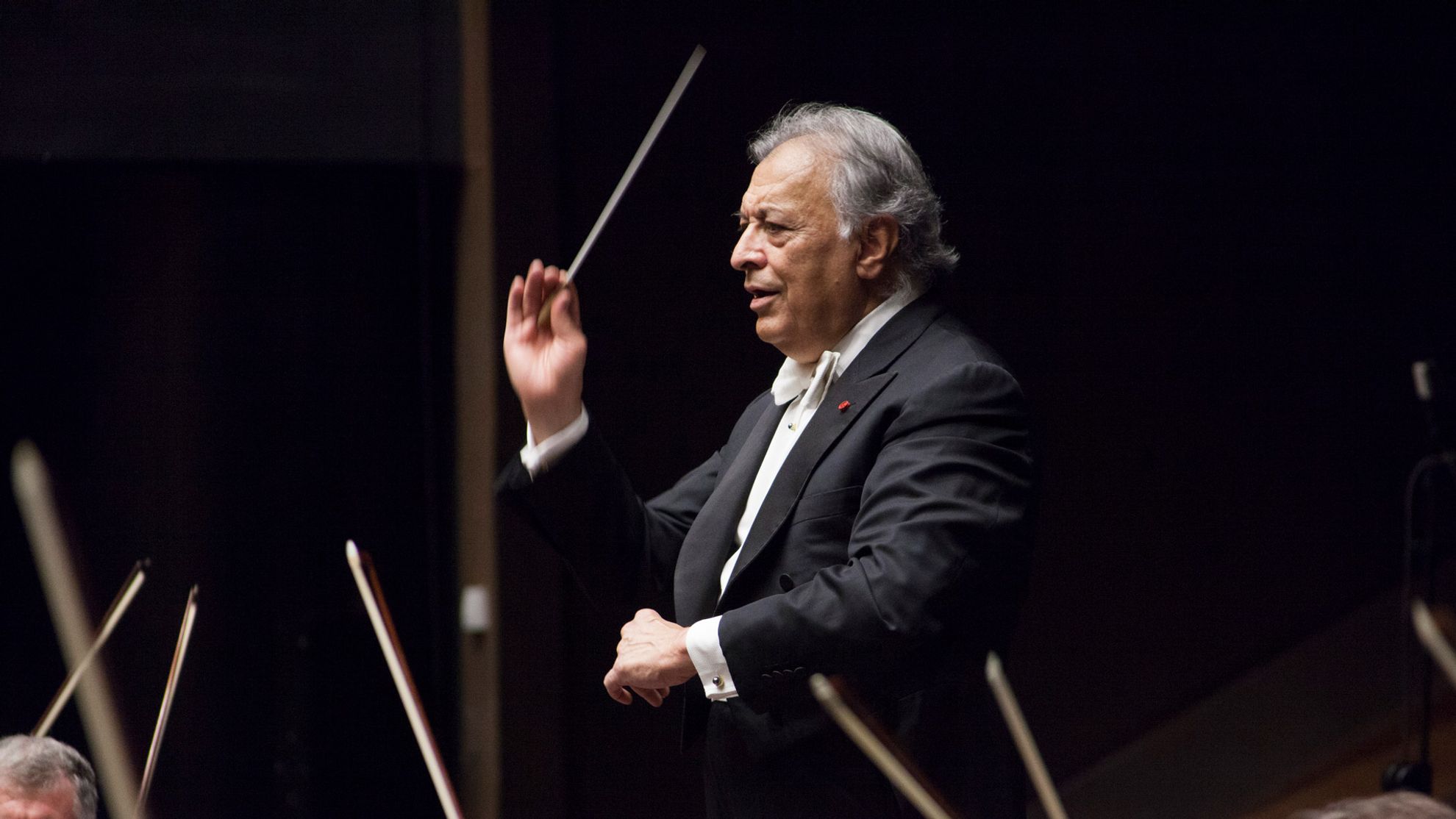
© Simone Donati
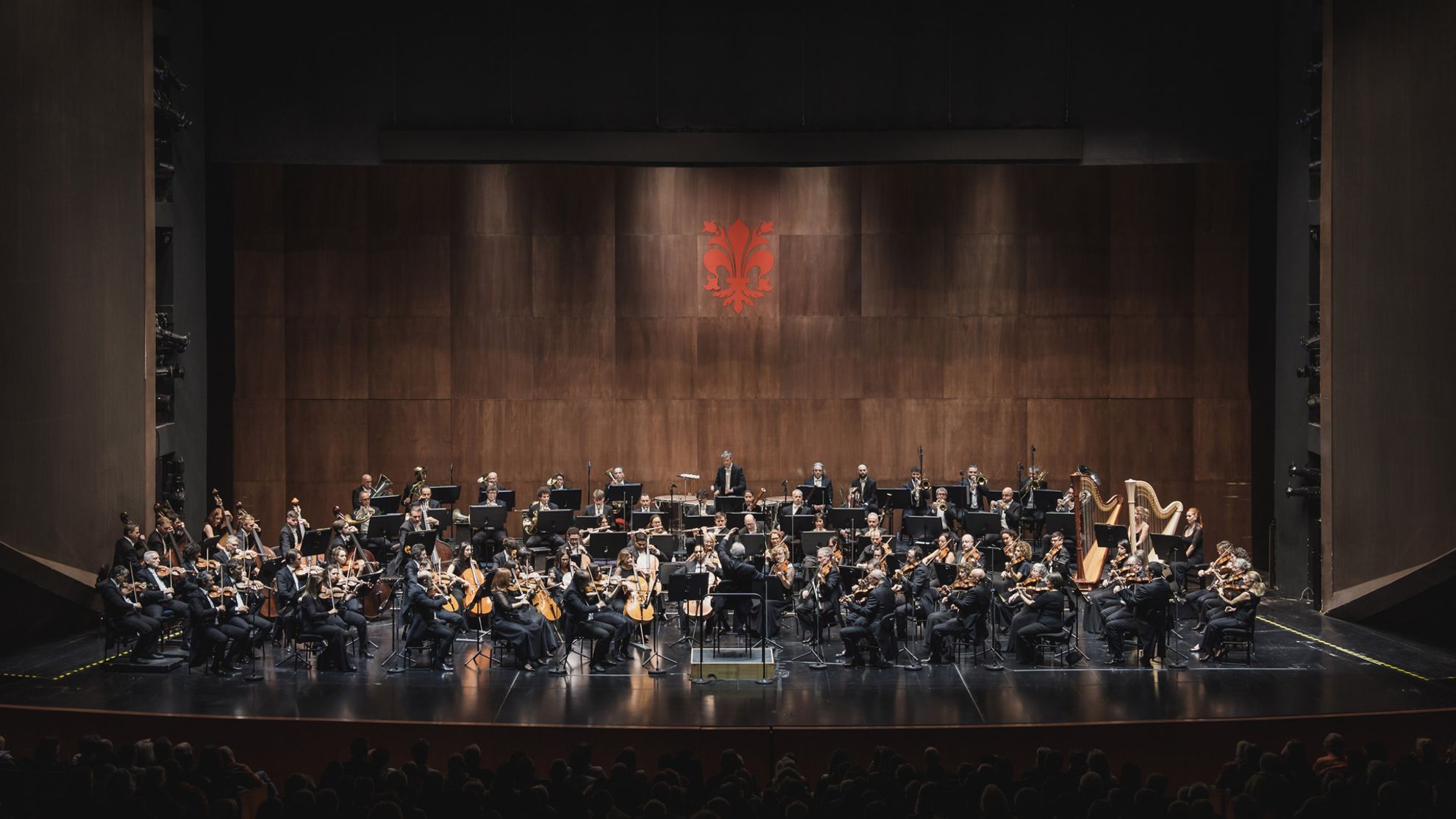
© Michele Monasta
1/2
Sala Teatro
Past event
07 February 2026
20:00
Orchestra del Maggio Musicale Fiorentino
Zubin Mehta
© Simone Donati
© Michele Monasta
1/2
Sala Teatro
Past event
07 February 2026
20:00
Wolfgang Amadeus Mozart (1756–1791)
Symphony No. 39 in E flat major, K. 543
Symphony No. 40 in G minor, K. 550
***
Symphony No. 41 in C major, K. 551 Jupiter
For the first time in Lugano, Zubin Mehta – one of the greatest conductors of our time – conducts the Orchestra del Maggio Musicale Fiorentino in a programme entirely dedicated to Mozart. At the centre is the symphonic testament of the genius from Salzburg, with the three symphonies composed in 1788, which represent one of the absolute pinnacles of the classical genre. Under Mehta's baton, these linear yet complex works shine in all their extraordinary formal and expressive richness.
In 1788, Wolfgang Amadeus Mozart composed three symphonies in a very short time: a triptych that represents the pinnacle of classical symphonism, synthesising Haydn's legacy and foreshadowing future developments in the genre. Symphony No. 39, in its solemnity and majesty, is characterised by an intense alternation between strength and lyricism. No. 40, dramatic and stormy, expresses anxieties that no composer of the time had dared to explore, while No. 41, “Jupiter”, is one of the highest expressions of Mozart's ability to reconcile intellect and emotion. Under the baton of Zubin Mehta and with the Orchestra del Maggio Musicale Fiorentino (of which Mehta is conductor emeritus for life), the three symphonies reveal all their monumental grandeur, highlighting the influence Mozart exerted on Western music, from Beethoven to Stravinsky. An unmissable experience to grasp the depth and magnificence of Mozart's symphonies.
First violins
Salvatore Quaranta (concertmaster)
Lorenzo Fuoco (concertino)
Boriana Nakeva (third chair)
Gianrico Righele
Anna Noferini
Laura Mariannelli
Emilio Di Stefano
Nicola Grassi
Angel Andrea Tavani
Simone Ferrari
Annalisa Garzia
Leonardo Matucci
Luisa Bellitto
Tommaso Vannucci
Anton Horvath
Ginevra Tavani
Second violins
Giacomo Scarponi (I)
Luigi Papagni (II)
Giacomo Rafanelli
Orietta Bacci
Rossella Pieri
Sergio Rizzelli
Laura Bologna
Cosetta Michelagnoli
Carmela Panariello
Corinne Curtaz
Isak Lenza
Ilaria Lanzoni
Bernadette Maria Lo Russo
Violas
Jörg Winkler (I)
Lia Previtali (II)
Herber Dézi (II)
Stefano Rizzelli
Flavio Flaminio
Cristiana Buralli
Donatella Ballo
Michela Bernacchi
Elisa Ragli
Claudia Marino
Valentina Gasperetti
Cellos
Patrizio Serino (I)
Simão Pedro Alcoforado Barreira (I)
Michele Tazzari (II)
Elida Pali (II)
Beatrice Guarducci
Wiktor Jasman
Sara Nanni
Sara Anna Spirito
Costanza Persichella
Aimon José Mata Gonzalez
Double basses
Riccardo Donati (I)
Marco Martelli (I)
Fabrizio Petrucci (II)
Daniele Gasparotto (II)
Nicola Domeniconi
Mauro Tedesco
Giulio Andrea Marignetti
Flutes
Gregorio Tuninetti (I)
Mattia Petrilli(I)
Alessia Sordini
Irene Lucci
Piccolo
Francesco Viola
Oboes
Marco Salvatori (I)
Luca Di Manso (I)
Alessandro Potenza
English horn
Massimiliano Salmi
Clarinets
Riccardo Crocilla (I)
Edoardo Di Cicco(I)
Leonardo Cremonini
Bassoons
Alejandra Rojas Garcia (I)
Sergi Niccolò (I)
Gianluca Saccomani
Francesco Furlanich
Horns
Luca Benucci (I)
Alessio Dainese (I)
Alberto Serpente
Alberto Simonelli
Michele Canori
Stefano Mangini
Trumpets
Claudio Quintavalla (I)
Marco Crusca
Emanuele Antoniucci
Tobia Guerri
Trombones
Fabiano Fiorenzani (I)
Giovanni Dominicis (I)
Andrea G. D’Amico
Massimo Castagnino
Bass trombone
Gabriele Malloggi
Bass tuba
Mario Barsotti
Timpani
Fausto Cesare Bombardieri (I)
Gregory Lecoeur (I)
Percussion
Lorenzo D’Attoma
Andrea Tiddi
Founded in 1928 by Vittorio Gui as the Stabile Orchestrale Fiorentina, it has been involved in concert activities and opera seasons at the Teatro Comunale in Florence since its inception and is now one of the most highly regarded orchestras by conductors and audiences around the world. In 1933, when the Festival was established, it took the name Orchestra del Maggio Musicale Fiorentino.
Gui was succeeded as permanent conductor by Mario Rossi (in 1937) and, after the war, by Bruno Bartoletti. Fundamental chapters in the history of the Orchestra are the permanent conductorship of Riccardo Muti (1969-81) and that of Zubin Mehta, Principal Conductor since 1985. Throughout its history, the Maggio Orchestra has been led by some of the greatest conductors, including Victor De Sabata, Antonio Guarneri, Gianandrea Gavazzeni, Tullio Serafin, Wilhelm Furtwängler, Bruno Walter, Otto Klemperer, Issay Dobrowen, Erich Kleiber, Arthur Rodzinski, Dimitri Mitropoulos, Herbert von Karajan, Leonard Bernstein, Thomas Schippers, Claudio Abbado, Lorin Maazel, Carlo Maria Giulini, Georges Prêtre, Wolfgang Sawallisch, Carlos Kleiber, Georg Solti, Riccardo Chailly, Giuseppe Sinopoli, Seiji Ozawa, Daniele Gatti and Fabio Luisi, who was the orchestra's music director from April 2018 to July 2019. Daniele Gatti is currently Principal Conductor and Zubin Mehta is Honorary Conductor for Life.
Illustrious composers such as Richard Strauss, Pietro Mascagni, Ildebrando Pizzetti, Paul Hindemith, Igor Stravinsky, Luigi Dallapiccola, Krzysztof Penderecki and Luciano Berio conduct their works at the Maggio Musicale Fiorentino, often in their first performances. Since the 1950s, the Orchestra has made numerous recordings for disc, radio and television, winning prestigious awards including a Grammy Award in 1990. On the eightieth anniversary of its foundation, it received the Fiorino d'Oro della Città di Firenze. It frequently tours internationally under the baton of Zubin Mehta, performing operas and concerts in Europe, Asia, the Middle East and South America.
Recent tours include the Salzburg Festival for a symphonic concert and Tosca in concert form, conducted by Zubin Mehta; Athens, the Grafenegg Festival, Budapest and Dubai for EXPO 2020. Recent European tours with Zubin Mehta have included Hamburg, Linz, Vienna, Luxembourg City, Muri and Dortmund, as well as two inaugural concerts at the new Auditorium of the Teatro del Maggio. In July 2022, he will take part in the Concerto per Firenze in the Cavea del Teatro del Maggio and in the tour to Piazza del Campo in Siena, Ravello, Rimini, Macerata and Marbella, conducted by Zubin Mehta.
It recently toured Bucharest (for Verdi's Otello and a concert) and Bangkok (for a concert), again with Zubin Mehta.
On 22 December 2023, it will take part in the concert celebrating the 90th anniversary of the founding of the Coro del Maggio Musicale Fiorentino.
Born in Bombay in 1936, he received his early musical education from his father, Mehli Mehta, a renowned violinist and founder of the Bombay Symphony Orchestra. After a brief period of preliminary medical studies, in 1954 he moved to Vienna, where he attended Hans Swarowsky's conducting courses at the Akademie für Musik. In 1958, he won the Liverpool International Conducting Competition and the Tanglewood Summer Academy prize. In 1961, he was invited to conduct the Vienna and Berlin Philharmonic Orchestras and the Israel Philharmonic Orchestra, with which he has collaborated for over 50 years. Music director of the Montreal Symphony (1961-1967) and the Los Angeles Philharmonic (1962-1978), he was appointed music director of the Israel Philharmonic in 1977, becoming its music director for life in 1981. In October 2019, he stepped down after more than 50 years and was named director emeritus.
In 1978, Zubin Mehta became Music Director of the New York Philharmonic, a position he held for 13 years, the longest period in the orchestra's history. From 1985 to 2017, he was Principal Conductor of the Orchestra del Maggio Musicale Fiorentino, of which he is currently Honorary Conductor for Life. He made his opera debut with Tosca in Montreal in 1963 and has since collaborated with the world's leading opera houses and festivals, including the Metropolitan in New York, the Wienerstaatsoper, Covent Garden in London, La Scala in Milan, the Chicago Opera, the Maggio Musicale Fiorentino and the Salzburg Festival. Between 1998 and 2006, he was Music Director of the Bayerische Staatsoper in Munich. In October 2006, he inaugurated the Palau de les Arts Reina Sofía in Valencia and became President of the Festival del Mediterrani. In the Spanish city and in Florence, he conducted, among other works, a memorable Der Ring des Nibelungen with La Fura del Baus, followed by other new productions of Wagner's cycle at the Chicago Opera and the Bayerische Staatsoper.
Among the awards and honours received by Zubin Mehta are: the Nikisch Ring bequeathed to him by Karl Böhm; honorary citizenship of Florence and Tel Aviv; and appointments as honorary member of the Wiener Staatsoper (1997), the Bayerische Staatsoper (2006) and the Gesellschaft der Musikfreunde Wien (2007). He is also Honorary Conductor of the Vienna Philharmonic (2001), the Munich Philharmonic (2004), the Los Angeles Philharmonic (2006), the Staatskapelle Berlin (2014) and the Bayerische Staatsorchester (2006), which he conducts on tour in Srinagar in Kashmir, and the Teatro di San Carlo in Naples (2016), as well as Director Emeritus of the Los Angeles Philharmonic (2019).
In 2008, he received the Praemium Imperiale from the Japanese imperial family; in 2011, his name was inscribed on the Walk of Fame on Hollywood Boulevard; in 2012, he was awarded the Cross of Merit of the Federal Republic of Germany, and in 2013, the Indian government awarded him the Tagore Award for cultural harmony.
Zubin Mehta encourages the discovery and promotion of new musical talent around the world: together with his brother Zarin, he is co-chairman of the Mehli Mehta Music Foundation in Mumbai, thanks to which more than 200 children are educated in Western classical music; Similarly, the Buchmann-Mehta School of Music in Tel Aviv provides young musicians with the opportunity to develop their skills in close collaboration with the Israel Philharmonic Orchestra, as part of a new project to teach young Arab-Israelis in the cities of Shwaram and Nazareth with local teachers and members of the Israel Philharmonic Orchestra. He has recently conducted numerous symphonic concerts and operas in Florence, including Verdi's Otello, Mozart's Così fan tutte, Puccini's Tosca in concert form and Verdi's La forza del destino (many of which have also been streamed).
Recent tours include the Salzburg Festival with the Maggio ensembles for a symphonic concert and Tosca in concert form, and concerts in Athens and Dubai for EXPO 2020.
He was recently appointed Ambassador of Florence for Culture and toured Europe with the Maggio Musicale Fiorentino Orchestra in Hamburg, Linz, Vienna, Luxembourg City, Muri and Dortmund. He inaugurated the hall dedicated to him in the new Auditorium of the Teatro del Maggio with two concerts.
In July 2022, he will conduct the Maggio Orchestra and Choir in the Concerto per Firenze in the Cavea del Teatro del Maggio and on tour in Piazza del Campo in Siena, Ravello, Rimini, Macerata and Marbella. Recent performances at the Maggio include Il trovatore, La traviata, Carmen and several concerts.
Most recently, he toured with the Maggio Orchestra and Choir in Bucharest (for Verdi's Otello and a concert), where he was awarded the highest honour by the Romanian government, and in Bangkok for a concert.
Duration
55' prima parte
20' intervallo
40' seconda parte