
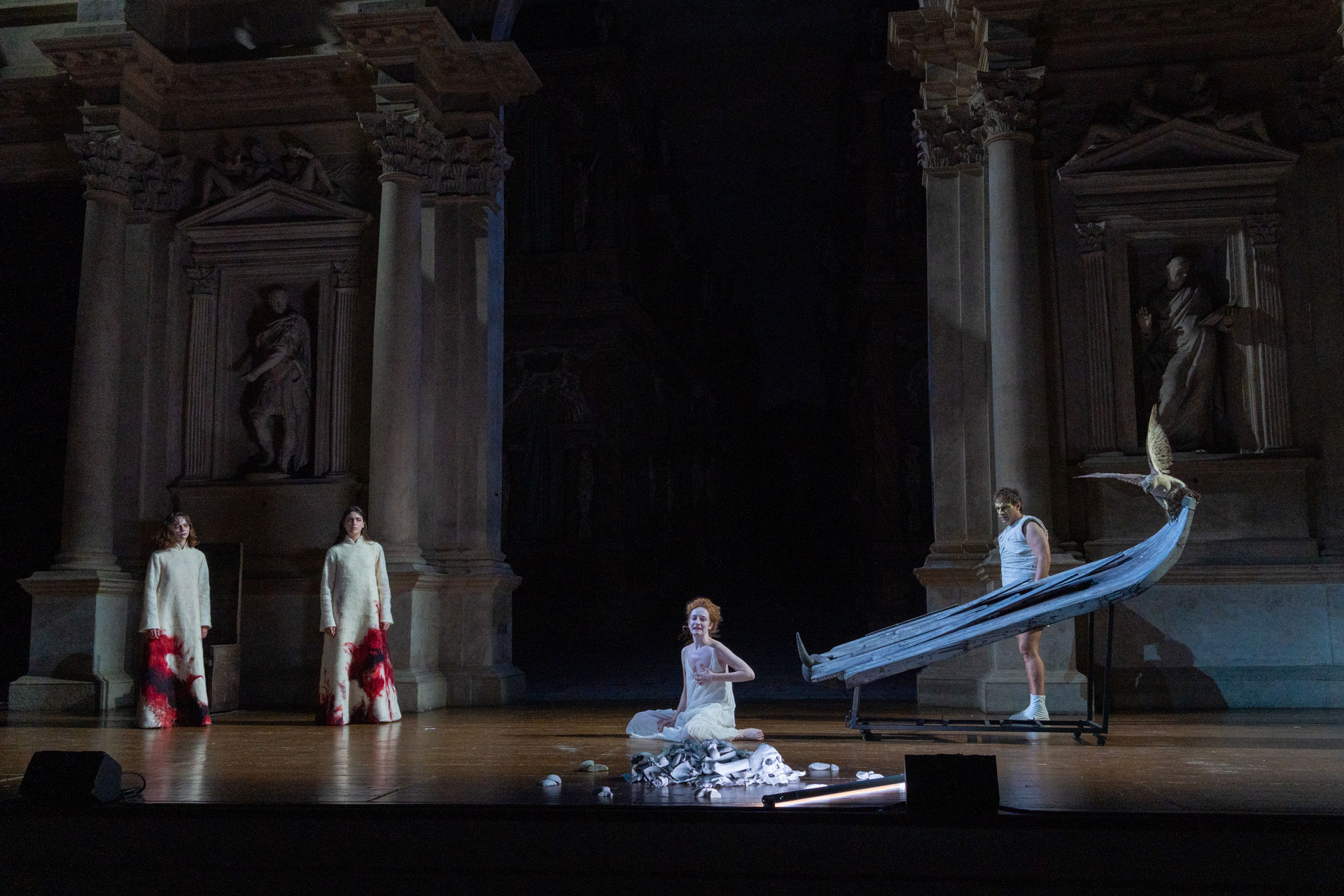


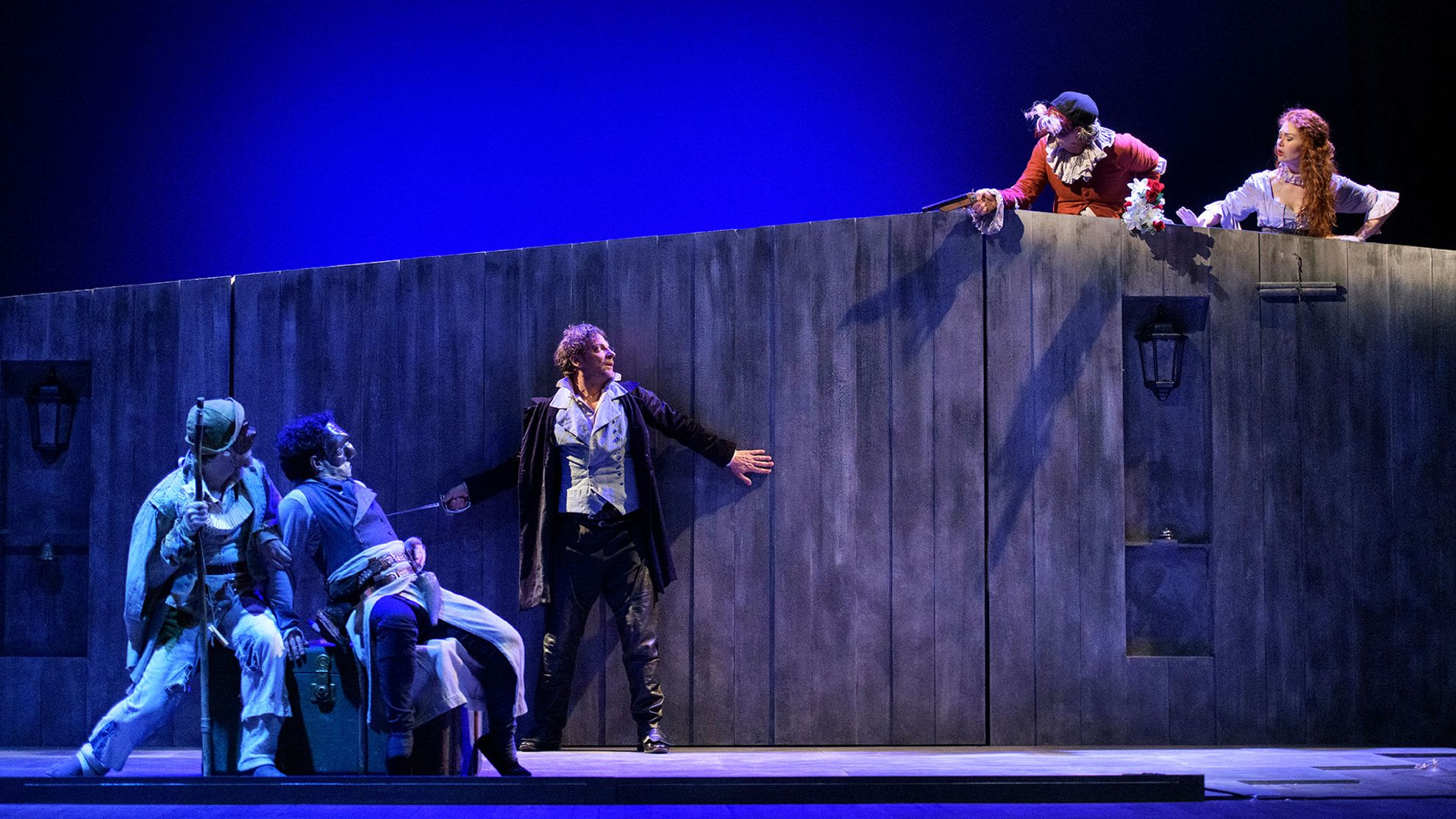
The Stivalaccio Teatro folk theater company offers a fresh take on one of the most frequently performed plays in early 18th-century Paris: *Il muto per spavento* is a grand tribute to the Commedia dell’Arte and to the distinctly Italian ability to make a virtue of necessity.
Harlequin, speechless with fear
Stivalaccio Teatro / Marco Zoppello
2 hours and 20 minutes
Act I: 1h20’
Intermission 20’
Act II 45’
Harlequin, speechless with fear
Stivalaccio Teatro / Marco Zoppello
2 hours and 20 minutes
Act I: 1h20’
Intermission 20’
Act II 45’
1716. After about fifteen years of forced exile, the Comici Italiani finally returned to take center stage in Parisian theater. Luigi Riccoboni, known by his stage name Lelio, the company’s leader, surrounded himself with the finest performers from Italy, including, for the first time in France, the Harlequin from Vicenza, Tommaso Visentini (nomen omen
), ready to replace the late and beloved Evaristo Gherardi. But Visentini did not speak French—an unforgivable shortcoming for the capital’s audience—and this is where Riccoboni’s genius shines through as he devises an original plot in which the servant from Bergamo becomes mute… out of fear.
A performance in which playfulness, invention, love, fear, and drama intertwine amid the unchanging grimaces of the masks, and in which the plotlines become tangled in misunderstandings and slowly unravel between the characters’ fingers.
An original Harlequin
, both for the choice of this previously unperformed plot and for the desire to bring the Commedia dell’Arte back into the spotlight—after at least twenty years of silence—with its “repertoire” of tools of the trade, such as acting, singing, dance, stage combat, comic antics, and improvisation.
Partner stagione di prosa